Blog

  • China’s Noodle Capital Wars: Which City Really Holds the Culinary Crown?

    By The World Desk

    BEIJING — In the world of Chinese gastronomy, few debates spark as much fierce regional pride as the title of “China’s Noodle Capital.” Across the country’s vast wheat and rice belts, ancient trade hubs and modern metropolises each claim culinary supremacy, boasting distinct starch traditions, centuries of craft, and hyper-loyal local followings.

    While every province offers its own regional pride, four heavyweight contenders stand at the center of this culinary civil war. Each represents a distinct philosophy of starch engineering, broth dynamics, and local culture.

    The Contenders: Four Titans of the Starch World

    • Lanzhou (Gansu Province) — The Silk Road Artisan: Lanzhou bases its claim on pure handcraft and worldwide ubiquity. The city’s famous clear beef noodle soup (Lanzhou Lamian) relies on master pullers stretching dough to order into nine distinct thicknesses. Lanzhou’s system is built around strict culinary discipline, where a single bowl must harmonize clear broth, white radish, red chili oil, green herbs, and yellow alkaline noodles.
    • Taiyuan & Datong (Shanxi Province) — The Cradle of Wheat: Shanxi does not claim a single iconic dish; it claims structural diversity. Known as the historical birthplace of Chinese wheat cookery, Shanxi boasts over several hundred documented ways to shape dough—from shaved Daoxiao Mian and pressed cat’s ear shapes (Mao Ear Mian) to dialed, rolled, and hand-cut strands. Here, the noodle itself is the main event, anchored by aged Shanxi mature black vinegar.
    • Chongqing — The High-Octane Heat Matrix: Chongqing approaches noodle making with raw, explosive energy. Its street-side Xiao Mian proves that complex broths are not always necessary when a shop can engineer a 13-ingredient emulsion of pig lard, roasted chili oil, numbing Sichuan peppercorns, garlic water, and fermented Ya Cai. Chongqing wins on sheer flavor intensity and daily per-capita consumption.
    • Wuhan (Hubei Province) — The Crossroads of Speed: Sitting at the geographic intersection of the Yangtze and Han rivers, Wuhan created Reganmian (Hot Dry Noodles) to feed bustling port workers. By pre-cooking alkaline noodles, setting them with sesame oil, and flash-blanching them before smothering them in thick, dark toasted sesame paste, Wuhan perfected high-volume, portable fast food that fuels millions every morning.

    Comparing the Capital Contenders

    City / RegionDominant Noodle TypeCulinary PhilosophyKey Flavor ProfileSignature Cultural Footprint
    LanzhouHand-Pulled Wheat (Lamian)Handcraft precision & broth harmonySavory, clean beef umami, aromatic chili oilGlobal fast-casual expansion & glass-kitchen theater
    Shanxi (Taiyuan/Datong)Shaved & Shaped Wheat (Daoxiao Mian)Textural variety & dough artistryNutty wheat starch, sour aged black vinegarDeep historical heritage & hundreds of physical shapes
    ChongqingThin Alkaline Wheat (Xiao Mian)Explosive sauce emulsionIntense Mala (numbing-spicy), rich pig lardMorning street stool culture & high daily consumption
    WuhanParboiled Alkaline Wheat (Reganmian)High-speed portability & rich pasteRich, nutty toasted sesame paste, dark soyHigh-volume morning Guo Zao street breakfast culture

    The Verdict: Craft, Variety, or Flavor?

    Declaring a definitive winner depends entirely on what a diner values most in a bowl of noodles:

    If the crown is awarded for global impact and technical skill, Lanzhou takes the prize. Its hand-pulling techniques have spread to every major city on earth.

    If the title is based on historical breadth and structural invention, Shanxi is the undisputed cradle of wheat innovation.

    If the metric is pure addiction and flavor intensity, Chongqing holds the throne.

    Ultimately, China’s noodle capital war has no single victor—and that is precisely what makes the country’s noodle culture so endlessly rich.

  • Luosifen: Why China’s Most Pungent Noodle Soup Created a Billion-Dollar Industry

    By The World Desk

    LIUZHOU, China — In the industrial city of Liuzhou in southern China’s Guangxi region, the air near night markets carries an unmistakable, lingering aroma. To newcomers, it is often described as a sharp, pungent cross between rotten garbage and aged blue cheese. To millions of loyal fans across the globe, it is the irresistible signature of Luosifen (Snail Rice Noodles).

    Once an obscure regional night-market snack, Luosifen has undergone one of the most explosive commercial rises in modern food history. In less than a decade, this hyper-local dish has transformed from street-side plastic tables into a multi-billion-dollar packaged food empire, capturing retail shelves worldwide and fueling a massive e-commerce phenomenon.

    The Polarizing Engine: Fermented Bamboo Shoots

    The notorious scent of Luosifen does not actually come from the snails used to brew its rich broth. The olfactory culprit is Suansun—traditional fermented sour bamboo shoots.

    Local producers prepare Suansun by sealing fresh spring bamboo shoots in closed earthenware jars with natural spring water, allowing anaerobic lactic acid fermentation to take place over months. During this process, complex microbial activity breaks down the plant matter, producing volatile organic compounds like skatole, organic acids, and sulfur-bearing molecules.

    While the raw aroma can be overwhelming, the chemical transformation yields an intense, mouth-watering sourness and deep umami bite when heated in broth. Combined with a fiery broth simmered for hours from river snails, pork bones, star anise, cardamom, and chili oil, Suansun provides the essential acidic counterweight that cuts through the heavy fat.

    From Street Stall to Industrial Retort Packaging

    For decades, Luosifen remained bound to Guangxi because fresh rice noodles and fermented bamboo shoots spoiled rapidly outside local supply chains.

    The turning point occurred around 2014, when local government initiatives and tech-minded entrepreneurs collaborated to standardise factory production. Engineers developed advanced retort sterilization and vacuum-sealing technologies capable of packaging raw ingredients without losing their signature textures or aromas:

    Packet ComponentPhysical ContentsIndustrial Function
    Rice NoodlesDried, high-starch extruded rice strandsEngineered for long shelf life; retains springy chew (Q-elastic) after boiling.
    Snail Broth BaseConcentrated river snail & pork bone reductionRetains deep seafood/meat umami via retort heat processing.
    Suansun PacketVacuum-sealed fermented sour bamboo shootsPreserves authentic sour tang and volatile aromatic profile safely.
    Chili OilHigh-heat roasted chili & aromatic oil infusionSupplies intense thermal heat and signature floating crimson layer.
    Crispy ToppingsDeep-fried Yuba (bean curd skin) & peanutsAdds crucial structural crunch against the soft noodles and rich soup.

    E-Commerce and the Pandemic Booster

    The packaged Luosifen revolution coincided perfectly with the rise of Chinese live-stream commerce and digital food culture. Charismatic influencers and food bloggers frequently hosted “challenge” broadcasts, testing their tolerance for the soup’s infamous smell. The viral intrigue transformed the dish into an instant digital sensation.

    When global lockdowns shifted dining habits indoors, demand for high-end, restaurant-quality instant meals skyrocketed. Packaged Luosifen sales exploded exponentially, generating billions of dollars in annual revenue. Industrial parks in Liuzhou now ship millions of instant packets daily across domestic and international trade routes.

    By turning a polarizing, stinky regional street food into an industrialized, shelf-stable, and highly addictive global commodity, Liuzhou proved that modern food engineering and digital marketing can turn even the most eccentric local traditions into a booming global industry.

  • Shanghai Oil-Scallion Noodles: The 4-Ingredient Masterpiece

    By The World Desk

    SHANGHAI — In the fast-paced metropolis of Shanghai, where haute cuisine and modern fusion dining constantly compete for attention, one of the city’s most beloved dishes remains astonishingly simple. Cong You Ban Mian (Scallion Oil Noodles) relies on no complex bone broths, rare spices, or elaborate garnishes.

    Instead, this iconic Jiangnan staple elevates four basic pantry ingredients into a fragrant, glossy masterpiece of fat-soluble flavor extraction.

    The Four Essential Pillars

    The brilliance of Cong You Ban Mian lies in its restraint. With nowhere to hide behind heavy sauces, every single ingredient must be selected and handled with precision:

    • Fresh Small Scallions (Spring Onions): Thin, tender green onions provide both the aromatic oil base and the crispy, caramelized topping.
    • Neutral Cooking Oil or Lard: Acts as the thermal extraction solvent, absorbing the volatile sulfur compounds and natural sugars from the scallions.
    • Soy Sauce Blend: A balanced mix of light soy sauce (for salinity and glutamate umami) and dark soy sauce (for deep color, body, and subtle caramel sweetness).
    • Fresh Thin Wheat Noodles: Fine, round wheat noodles that cook rapidly and offer a springy, toothsome chew (al dente) to hold the glossy oil dressing.

    The Science of Low-and-Slow Infusion

    The critical technical error in making scallion oil is frying the greens over high heat. High temperatures scorch the delicate leaves, imparting a burnt, bitter taste to the oil.

    Authentic Shanghai cooks employ a gentle Low-and-Slow Thermal Extraction:

    1. Separation: Scallion whites (which contain higher water content) are added to cold oil first, followed by the green tops once the whites begin to soften.
    2. Gentle Simmer: The scallions are cooked over low heat for 15 to 20 minutes. As moisture slowly evaporates, the allicin and sulfur compounds in the scallions break down into sweet, nutty pyrazines.
    3. Caramelization: The process continues until the scallions turn a pale, golden bronze and become crisp, rather than charred black. The crispy fried scallions are then removed and reserved as a crunch garnish.

    The Sauce Emulsion and Assembly

    Once the scallions are fried, the hot infused oil is combined directly with the soy sauce mixture and a pinch of sugar in the wok.

    ComponentPrimary FunctionSensory Contribution
    Scallion-Infused OilLipid base & aromatic carrierRich, nutty, sweet onion aroma; coats every strand.
    Light Soy SauceSalinity & free glutamatesSharp, savory umami base.
    Dark Soy SauceViscosity & natural pigmentGlossy amber-black coating; subtle molasses undertone.
    Sugar (Rock or Granulated)Chemical balancerMallows the sharp soy salinity; helps glaze the noodles.

    Boiling the soy sauce and sugar briefly in the scallion oil dissolves the sugar crystals and creates a lightly emulsified, glossy reduction.

    Freshly boiled wheat noodles are drained thoroughly—preventing excess water from diluting the oil—and tossed immediately in the hot sauce. Topped with the crispy caramelized scallion stalks, the resulting bowl delivers an unforgettable contrast of rich aromatics, savory depth, and delicate crunch.

  • Cantonese Wonton Noodles: The Delicate Art of Shrimp, Pork, and Springy Dough

    By The World Desk

    HONG KONG — In the bustling morning rush of a traditional Hong Kong Cha Chaan Teng or noodle shop, a distinct rhythm echoes from the kitchen. Baskets of ultra-fine yellow noodles are plunged into vats of rolling water, tossed high into the air to drain, and nestled into small porcelain bowls over plump, translucent dumplings and a steaming, amber broth.

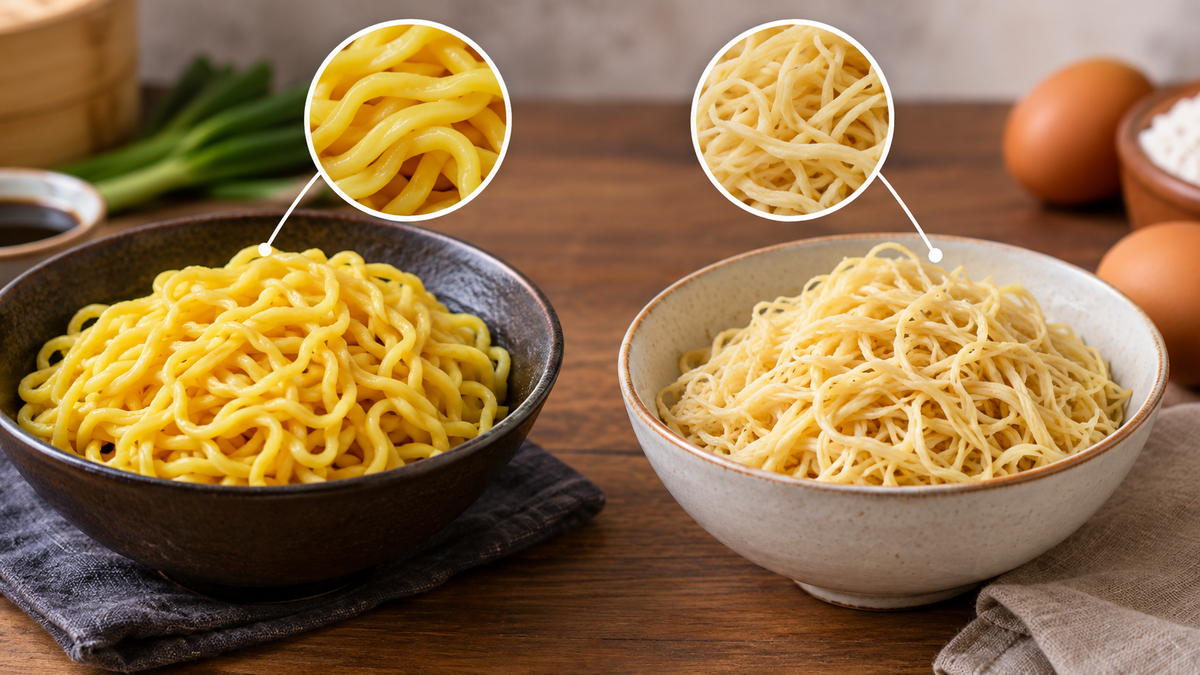
    While many northern Chinese noodle dishes rely on heavy braises, thick sauces, or fiery chili oils, Cantonese Wonton Noodles (Wan Tan Mian) are defined by restraint, clarity, and structural balance. Every element—from the snap of the dough to the golden broth—is designed to highlight the natural sweetness of fresh seafood and pork without overpowering the palate.

    The Architecture of the Wonton: Shrimp, Pork, and Wrapper

    The heart of the dish lies in the wonton dumpling, which follows a strict ratio and wrapping technique distinct from northern-style Jiaozi.

    Unlike mainland variations that incorporate heavy starch binders or thick skins, a traditional Cantonese wonton features a paper-thin, egg-based wrapper that turns almost completely translucent when cooked.

    • The Fill Ratio: Authentic Cantonese wontons prioritize wild sea shrimp (such as glass shrimp or mud shrimp) balanced by a small proportion of minced pork shoulder and pork fat—typically a 70:30 or 80:20 shrimp-to-pork ratio.
    • The Texture Target: The shrimp is lightly cured with salt and sesame oil to retain a crisp, snappy texture (shuang kou), rather than being ground into a smooth paste.
    • The Goldfish Tail Wrap: The wrapper is folded lightly over the filling and pinched tightly at the top, leaving a trailing tail of thin dough. When submerged in broth, these delicate tails float like the fins of a goldfish, holding onto tiny drops of soup with every bite.

    Jook-Sing Mian: The Ancient Art of Bamboo-Pressed Dough

    The defining characteristic of Cantonese wonton noodles is their extreme elasticity and springy bite—a texture often described in Cantonese as Yung Ngai (toothsome resistance) or Q-elastic.

    This texture is achieved through an intensive, physical method of dough preparation known as Jook-Sing Mian (Bamboo Pole Noodles):

    1. Waterless Dough: The dough is made exclusively with high-protein wheat flour, duck eggs (or chicken eggs), and alkaline lye water (Kansui), containing virtually no added water. Duck eggs provide rich fat and a deep golden color, while alkaline water strengthens the gluten network and imparts a signature springy snap.
    2. The Bamboo Press: Instead of being rolled by hand or extruded by machine, the baker mounts a massive, six-foot bamboo pole anchored to a workbench. Sitting on the opposite end, the baker uses their full body weight to rhythmically bounce up and down over the dough for hours, pressing it into ultra-thin, dense sheets.
    3. Fine Shredding: The dense sheet is folded and sliced into hair-thin strands that cook in boiling water in under ten seconds without losing their structural integrity.

    The Golden Broth: Flounder, Bones, and Yellow Chives

    The broth (Tang) of a master wonton noodle bowl is crystal clear, lightly golden, and deeply aromatic. It avoids heavy soy sauce or dark spices, relying instead on a delicate combination of sea and land umami:

    Broth ComponentCulinary Purpose & Flavor Contribution
    Sun-Dried Flounder (Zuo Kou Yu)Roasted over open flames before simmering; supplies a smoky, concentrated seafood umami.
    Pork Bones & Old HensSimmered gently to provide baseline body, collagen, and savory depth without clouding the soup.
    Dried Shrimp Shells & Sand GojiAdds a subtle, lingering natural sweetness and bright coral hue to the stock.
    Yellow Chives (Jiu Huang)Placed raw at the bottom of the bowl; provides a mild, sweet, onion-like aroma as hot broth is poured over.

    The Strict Stacking Assembly

    To prevent the delicate noodles from absorbing too much broth and turning soggy before reaching the table, Cantonese chefs assemble the bowl in a precise, inverted order:

    [Top Layer]    --> Floating Springy Noodles (Kept dry and suspended above broth)
    [Middle Layer] --> Deep Soup Spoon (Acts as a physical pedestal)
    [Bottom Layer] --> Plump Wontons & Fresh Yellow Chives resting in Hot Broth
    

    By placing the spoon and wontons at the bottom of the bowl, the noodles rest elevated above the liquid line, maintaining their crisp, bouncy texture from the kitchen pass to the diner’s first bite.

    In a modern culinary landscape where heavy seasonings often mask poor ingredients, Cantonese wonton noodles stand as a testament to the power of precision. Through labor-intensive dough pressing, careful seafood selection, and clear broth engineering, this classic dish continues to define the delicate art of Cantonese gastronomy.

  • The Fiery Allure of Chongqing Small Noodles (Xiao Mian)

    By The World Desk

    CHONGQING, China — In the mountainous, fog-draped metropolis of Chongqing, the morning air does not wake up to the smell of coffee or roasting bread. Instead, the alleyways and steep staircases of this Southwestern megacity ring out with the sizzle of hot oil, raw garlic, and the distinctive aroma of toasted chilies.

    Here, before the sun fully clears the Yangtze River, millions of residents hunch on low plastic stools along the pavement for a ritual known as guo zao—consuming a piping-hot bowl of Chongqing Xiao Mian (Chongqing Small Noodles).

    While its cousin Dandanmian gained fame in nearby Chengdu, Xiao Mian is the unpretentious, ferocious workhorse of Chongqing cuisine. It is a dish where the noodle takes a back seat to an explosive, multi-layered sauce base that showcases the absolute limits of Sichuan spice dynamics.

    What Makes a Noodle “Small”?

    The term Xiao Mian (literally “small noodles”) does not refer to the size or physical length of the strand. Rather, “small” denotes the humble, plain nature of the base dish.

    Traditionally, Xiao Mian refers to a bowl of basic wheat noodles served without any expensive meat toppings—no braised beef, no pork ribs, and no minced meat. The complexity relies entirely on the liquid dressing resting at the bottom of the bowl, crafted from a precise sequence of over a dozen seasonings and aromatics.

    To order Xiao Mian in Chongqing is to participate in a hyper-customized street ritual. Diners specify their exact preferences to the cook: Gan Mian (dry-tossed without broth) versus Tang Mian (served in soup), alongside custom adjustments for chili oil, numbing peppercorns, and vegetable ratios.

    The Architecture of the 13-Ingredient Base

    Executing an authentic bowl of Xiao Mian requires building a complex emulsion of fat, acid, aromatics, and spices. Before the cooked noodles hit the bowl, the vendor assembles a minimum of thirteen distinct ingredients in a specific order:

    1. Lard & Rendered Pork Fat: Provides a heavy lipid base that coats the tongue and carries fat-soluble flavor compounds.
    2. Sichuan Chili Oil (Hong You): Crafted from high-heat roasted chilies to deliver deep red color and scorching thermal heat.
    3. Ground Sichuan Peppercorns: Adds a sharp, vibrating numbness (Ma) that offsets the thermal burn of the chilies.
    4. Minced Raw Garlic Water: Fresh garlic crushed with cold water to release sharp, pungent allicin.
    5. Ginger Water: Freshly squeezed ginger juice that adds a clean, biting warmth.
    6. Soy Sauce: Provides baseline salinity and rich amino acid glutamates.
    7. Aged Black Vinegar: A subtle splash of acidic black vinegar to cut through the heavy pig lard and oil.
    8. Toasted Sesame Paste: A small spoon of dark nut paste to add body and bind the liquid seasonings together.
    9. Sesame Oil: Imparts a bright, top-note nutty aroma.
    10. Preserved Vegetables (Yibin Ya Cai or Zha Cai): Salt-cured mustard greens that supply crunchy texture and savory funk.
    11. Toasted Peanuts or Soybeans: Roasted until golden to add a loud, nutty crunch against the soft noodles.
    12. Scallions & Cilantro: Fresh green aromatics scattered on top for visual contrast and herbal brightness.
    13. Noodle Cooking Broth: A ladle of starchy boiling water or light pork-bone broth added to melt the lard and emulsify the seasonings into a pourable sauce.

    The Chemistry of “Mala” in High Humidity

    The intense obsession with Xiao Mian in Chongqing is deeply intertwined with the city’s extreme geography and climate. Surrounded by steep mountains and the confluence of two major rivers, Chongqing experiences oppressive humidity and dense fog for much of the year.

    According to traditional Chinese food philosophy, consuming heavy doses of Mala (numbing and spicy flavors) stimulates perspiration and accelerates blood circulation, helping the body expel internal dampness (shi qi).

    Beyond traditional beliefs, the combination of capsaicin from chilies and hydroxy-alpha-sanshool from Sichuan peppercorns triggers an endorphin release in the brain. This natural neurochemical rush provides a quick energy boost, explaining why blue-collar laborers and office workers alike rely on Xiao Mian to jumpstart their workday.

    From Street Stalls to Culinary Identity

    In recent years, Chongqing Xiao Mian has evolved from a local street food into a recognized symbol of municipal pride. Local governments have established official preparation standards, and specialized Xiao Mian competitions draw millions of digital viewers nationwide.

    Despite its rise in status and modern shop fronts, the soul of Xiao Mian remains firmly anchored to the street corner. It is a dish that refuses to be refined or softened for delicate palates. Proudly fiery, intensely aromatic, and unpretentiously fast, Chongqing Small Noodles stand as a living testament to the bold, unapologetic spirit of the city itself.

  • 10 Iconic Regional Chinese Noodle Dishes Every Food Lover Must Try

    By The World Desk

    BEIJING — To understand the vast culinary geography of China, one need look no further than a simple bowl of noodles. Across twenty-three provinces, the interplay of regional climates, historical trade routes, and local starches has birthed hundreds of distinct noodle traditions.

    From the icy plains of the northern wheat belt to the humid river valleys of the south, these ten iconic regional noodle dishes represent the absolute pinnacle of Chinese culinary craftsmanship.

    1. Lanzhou Beef Noodles (Gansu)

    Hailing from the Silk Road hub of Lanzhou, this clear-broth masterpiece is famous for its live kitchen performance. Chefs pull fresh dough by hand into varying thicknesses—from hair-thin to broad ribbons—before submerging them in a crystal-clear, long-simmered beef bone stock. The bowl is finished according to the strict “Five Criteria”: clear broth, white radish slices, red chili oil, green cilantro, and yellow alkaline noodles.

    2. Biang Biang Noodles (Shaanxi)

    Named after the loud biang-biang sound created when slap-stretching dough against a wooden counter, this Shaanxi classic features belt-width wheat ribbons up to three feet long. Served you po style, the wide noodles are topped with minced garlic, scallions, and heavy ground chili flakes before being doused with boiling rapeseed oil, creating a searing, aromatic glaze.

    3. Dan Dan Noodles (Sichuan)

    Originating as a street food carried on bamboo shoulder poles (dan) in Chengdu, this dish rests on a fiery, complex sauce layer at the bottom of the bowl. Fresh wheat noodles are tossed with Chinese sesame paste, Sichuan chili oil, numbing Sichuan peppercorn powder, aged black vinegar, and crispy sautéed pork topped with crunchy Ya Cai (fermented mustard greens).

    4. Zhajiangmian (Beijing)

    Beijing’s signature comfort food is defined by its thick, savory sauce made from fermented yellow soybean paste (Huangdou Jiang) simmered slowly with diced pork belly and fat. Served over chewy, thick wheat noodles, the rich, dark sauce is balanced by an array of fresh, raw garnishes, including shredded cucumbers, bean sprouts, radish, and fresh soybeans.

    5. Guilin Rice Noodles (Guangxi)

    Dating back to the Qin Dynasty, these silky, extruded rice strands (Mifen) are served dry with a ladle of concentrated, herbal Lushui gravy simmered for hours with over twenty traditional medicinal spices. The dish is topped with crispy deep-fried pork belly (Guoshao), roasted peanuts, and sour pickled long beans before a ladle of clear bone broth is added at the end of the meal.

    Regional Masterpieces at a Glance

    Dish NameNative RegionPrimary Noodle TypeKey Flavor Anchor
    Lanzhou Beef NoodlesGansu ProvinceHand-pulled wheat (Lamian)Clear spiced beef broth & chili oil
    Biang Biang NoodlesShaanxi ProvinceBelt-width slapped wheatFlash-seared chili oil & black vinegar
    Dan Dan NoodlesSichuan ProvinceThin wheat noodlesNumbing chili oil & fermented Ya Cai
    ZhajiangmianBeijingThick chewy wheat noodlesFermented yellow soybean paste
    Guilin Rice NoodlesGuangxi ProvinceExtruded round rice (Mifen)Concentrated herbal Lushui gravy
    Wuhan ReganmianHubei ProvinceParboiled alkaline noodlesRich, dark toasted sesame paste
    Shanxi Daoxiao MianShanxi ProvinceShaved knife-cut wheatBraised meat stews & aged vinegar
    LuosifenGuangxi (Liuzhou)Chewy rice noodlesFermented sour bamboo shoot broth
    Crossing-the-BridgeYunnan ProvinceFermented rice (Mixian)Insulated fowl broth & fresh toppings
    Cantonese WontonGuangdong ProvinceThin alkaline egg noodlesClear dashi/shrimp broth & pork wontons

    6. Wuhan Hot Dry Noodles (Hubei)

    Wuhan’s ultimate breakfast staple (Reganmian) is engineered for speed and portability. High-gluten alkaline noodles are parboiled, coated in sesame oil, and air-dried. When ordered, they are flash-blanched for ten seconds and tossed dry with a thick, velvety toasted sesame paste, dark soy sauce, pickled radish, and chili oil.

    7. Shanxi Knife-Cut Noodles (Shanxi)

    Shanxi province is the undisputed wheat capital of China, and Daoxiao Mian is its prized export. Chefs hold a dense block of dough in one hand and use a curved arc blade to shave razor-thin ribbons directly into a cauldron of boiling water. The resulting triangular cross-section—thick in the middle and thin at the edges—creates a unique dual texture that holds onto thick braised meat sauces.

    8. Luosifen / Snail Rice Noodles (Guangxi)

    Hailing from the industrial city of Liuzhou, Luosifen has evolved into a global e-commerce phenomenon. The dish features springy rice noodles submerged in a spicy, umami-rich broth made from river snails and pork bones. Its famous, polarizing aroma comes from Suansun (fermented sour bamboo shoots), balanced by chili oil, fried bean curd skin, and wood ear mushrooms.

    9. Crossing-the-Bridge Rice Noodles (Yunnan)

    Born in the mountain city of Mengzi, this dish relies on a clever thermodynamic design. A roaring-hot bowl of chicken bone broth is sealed with a thick layer of rendered chicken fat to trap steam heat. Diners submerge paper-thin slices of raw meat, quail eggs, fresh herbs, and soft rice noodles (Mixian) directly at the table, cooking the ingredients instantly without an active flame.

    10. Cantonese Wonton Noodles (Guangdong)

    A testament to delicate Cantonese precision, this dish pairs paper-thin shrimp and pork dumplings with ultra-fine, springy egg noodles (Jook-Sing Mian). The alkaline noodles are cooked briefly to preserve an elastic, rubbery snap (Q-elastic) and served in a clear, golden broth simmered with dried flounder, pork bones, and yellow chives.

  • Zha Jiang Mian: Beijing’s Timeless Fried Sauce Noodles Explained

    By The World Desk

    BEIJING — In the historic hutongs (alleyways) of China’s capital, the sound of a wooden spoon striking a cast-iron wok signals the preparation of Beijing’s definitive culinary staple: Zhajiangmian (literally “fried sauce noodles”).

    While modern food culture frequently celebrates complex broth reductions and fiery chili oils, Zhajiangmian remains a masterclass in dry-tossed minimalism. The dish pairs thick, chewy wheat noodles with a glossy, jet-black fermented bean sauce and an array of raw, crunchy vegetable garnishes.

    It is a humble meal born of northern agricultural necessity that has survived dynasties, urban modernization, and imperial transitions to remain the undisputed comfort food of Beijing.

    The Chemical Heart: Fermented Bean Paste

    The flavor engine of authentic Zhajiangmian lies in its sauce, which relies on a precise combination of two distinct fermented wheat and soybean pastes:

    • Huangdou Jiang (Yellow Soybean Paste): Made from fermented soybeans, wheat flour, and salt. It provides a sharp, salty baseline packed with free glutamates.
    • Tianmianjiang (Sweet Wheat Paste): A fermented wheat flour paste where starches break down into natural sugars, providing a rich, dark color and a subtle sweet undertone.

    To prepare the sauce, fatty pork belly is diced into small cubes and rendered in a wok until the lard releases. The paste mixture is added directly to the hot pork fat and fried (zha) over low heat for upwards of thirty minutes.

    This slow-frying process evaporates moisture and caramelizes the starches, resulting in a thick, concentrated, and glossy black sauce that clings to the noodles without running.

    The Refreshing Balance of the Seven Garnish Elements

    Because the fried pork paste is exceptionally rich, salty, and fat-dense, a traditional bowl of Zhajiangmian requires a sharp textural counterweight. This is achieved through Mian Ma—an array of raw, thinly sliced vegetable garnishes served alongside or on top of the warm noodles.

    Garnish ElementPhysical PreparationSensory Role
    CucumberJulienne stripsDelivers watery crunch and neutralizes heavy salinity.
    Radish (Beauty Heart)Fine matchsticksProvides a sharp, peppery bite and bright visual contrast.
    Bean SproutsLightly blanchedAdds structural volume and a crisp, juicy texture.
    Fresh SoybeansBoiled until tenderOffers a nutty, creamy pop that echoes the fermented paste.
    Garlic Chives / ScallionsFinely choppedProvides sharp, sulfurous aromatics to cut through pork fat.
    Raw Garlic ClovesServed whole on the sideEaten raw between bites for an intense, pungent kick.

    The Noodle Base: Hand-Cut Wheat

    In accordance with northern culinary traditions, the noodles used for Zhajiangmian are made strictly from high-gluten wheat flour and water.

    The dough is rolled out into thick sheets and cut manually into wide, square-edged strands (Qiedao Mian). The noodles are boiled briefly and served warm (Zhen Mian) during winter months, or quickly rinsed in cold water (Leng Mian) during hot Beijing summers to maximize their springy, elastic chew.

    When served, the black sauce rests atop the plain white noodles, surrounded by colorful mounds of fresh vegetables. Diners use their chopsticks to vigorously toss the bowl, coating every strand of wheat in a glossy, savory glaze balanced by raw, crunchy freshness in every bite.

  • Century-Old Fermented Condiments That Give Chinese Noodles Their Signature Kick

    By The World Desk

    SHANGHAI — While the dramatic flare of flame and the physical art of stretching dough capture the eye, the true flavor engine of Chinese noodle cookery resides in darkened fermentation vaults across the country. In earthen jars aged for months—or even decades—microorganisms work quietly to transform humble soybeans, grains, and vegetables into complex flavor pastes.

    These centuries-old fermented condiments provide the underlying depth, savory funk, and signature kick that define regional noodle bowls. Without these ancient microbial transformations, Chinese noodle cookery would lose its essential umami anchor.

    1. Doubanjiang: The Soul of Sichuan Cuisine

    Hailing from Pixian in Sichuan province, Pixian Doubanjiang is a dark, oily paste crafted from fermented broad beans (fava beans), fresh Erjingtiao chilies, salt, and wheat flour. The mixture is aged in outdoor earthenware urns exposed to natural sunlight and weather cycles for anywhere from one to three years.

    During fermentation, natural molds (Aspergillus oryzae) break down the bean proteins into free amino acids, producing a deep, salty, and complex umami paste. When seared in hot oil at the base of a wok, Doubanjiang releases its characteristic brick-red oil and pungent aroma, forming the non-negotiable flavor foundation for Dandanmian and Sichuan braised beef noodle soups.

    2. Douchi: Fermented Black Beans

    Originating over 2,000 years ago during the Han Dynasty, Douchi is China’s oldest known soybean product. Made by fermenting and salting black soybeans, these soft, wrinkled morsels deliver a sharp, savory, and slightly bitter bite.

    In Cantonese and Hunanese noodle cookery, Douchi is smashed with garlic and flash-fried in oil to create aromatic sauces for wok-tossed flat rice ribbons (Ho Fun). The intense concentration of glutamates in the fermented beans cuts through heavy animal fats, adding a savory punch that lingers on the palate.

    3. Huangdou Jiang: Northern Sweet Bean Paste

    In the cold northern plains, Huangdou Jiang (yellow soybean paste) and its closely related cousin Tianmianjiang (sweet wheat paste) dictate the regional palate. Made from fermented yellow soybeans, wheat flour, and salt, this thick, dark paste undergoes a secondary fermentation that converts starches into natural sugars.

    This sweet-and-savory paste serves as the primary base for Beijing’s iconic Zhajiangmian (“fried sauce noodles”). Simmered slowly with diced pork belly and animal fat, the paste darkens into a rich, glossy glaze that clings to thick, chewy wheat strands.

    Comparing Ancient Fermented Condiments

    CondimentPrimary Fermentation IngredientsKey Regional Noodle PairingFlavor & Sensory Contribution
    Pixian DoubanjiangBroad beans, Erjingtiao chilies, saltSichuan Dandanmian, Braised Beef NoodlesDeep, spicy umami, brick-red color, warm earthy aroma
    Douchi (Black Beans)Black soybeans, salt, ginger/spicesCantonese Beef Chow Fun, Hunan Dry NoodlesSharp, pungent, salty-savory burst, cuts heavy fats
    Huangdou JiangYellow soybeans, wheat flour, saltBeijing Zhajiangmian, Northern Stirred NoodlesRich, sweet-and-savory glaze, dark color, deep body
    Sichuan Ya CaiMustard green stems, brown sugar, spicesYibin燃面 (Burning Noodles), DandanmianCrunchy texture, salty-sweet funk, complex pickled acid

    4. Ya Cai & Suan Cai: Fermented Vegetable Preserves

    Fermentation in Chinese noodle culture extends beyond beans to leafy greens. Sichuan Ya Cai (fermented mustard green stems) and Suan Cai (pickled sour mustard greens) are cured with salt, dried, and stored in airtight vessels to encourage lactic acid fermentation.

    When added to noodle bowls, these fermented vegetables deliver a dual functionality: the lactic acid provides a bright, sour tang that balances rich bone broths, while the crunchy physical texture provides a satisfying contrast to soft, chewy noodles.

    From the street stalls of Chengdu to the dining rooms of Beijing, these ancient fermented condiments prove that the secret to extraordinary flavor lies in patience, time, and microbial craft.

  • The Secrets of Master Broth: How Chinese Noodle Shops Achieve Deep Umami

    By The World Desk

    BEIJING — In the world of Chinese noodle craftsmanship, if the noodle provides the body and structure of a bowl, the broth (Tang) is its soul. Long before a customer takes their first bite, the air inside an authentic noodle shop is heavy with the rich, simmering perfume of a broth that has been bubbling on the stove for upwards of twelve hours.

    Achieving the deep, layered umami that defines a master broth is neither an accident nor a simple matter of salt. It is an exact science of thermal extraction, fat emulsification, and the synergy of natural glutamate compounds.

    The Molecular Synergy of Umami

    The secret behind a truly memorable noodle broth lies in the chemical phenomenon known as synergistic umami.

    Umami—the savory fifth taste—is primarily triggered when monosodium glutamate (MSG) binds to taste receptors on the human tongue. However, food scientists discovered that when free glutamates are combined with purine nucleotides (specifically inosine monophosphate, or IMP, and guanosine monophosphate, or GMP), the perceived umami intensity multiplies exponentially rather than additively.

    Chinese noodle masters harness this molecular reaction through precise ingredient pairing:

    • Glutamate Sources: Dried kelp (Kombu), aged Chinese cabbage, tomatoes, and fermented soy bases.
    • IMP & GMP Sources: Pork leg bones, aged Jinhua ham, dried scallops (Ganbei), dried shrimp, and chicken feet.

    When a broth simmers Jinhua ham (high IMP) alongside aged vegetables and kombu (high glutamate), the taste receptors experience a tenfold increase in savory perception compared to a broth made with meat alone.

    Clarity vs. Emulsion: Hung Tang vs. Pai Tang

    In traditional Chinese broth making, chefs divide stocks into two distinct physical states, governed entirely by temperature control and lipid mechanics:

    Broth CategoryVisual ProfileCooking Dynamic & ScienceClassic Application
    Clear Broth (Hung Tang)Crystal clear, gold-hued, light bodySimmered at a gentle rolling temperature (below 190°F / 88°C). Proteins coagulate gently without breaking up, keeping fats and water separated.Lanzhou Beef Noodle Soup, Cantonese Wonton Soup
    Milky Broth (Pai Tang)Opaque white, thick, rich bodyBoiled vigorously over high heat (212°F / 100°C). Violent movement forces rendered fat and dissolved collagen to emulsify into micro-droplets, suspended in water.Yunnan Rice Noodle Stocks, Heavy Pork Bone Bases

    The Pre-Treatment Protocol: Blanching and Scum Extraction

    The hallmark of an amateur broth is a cloudy, metallic, or bitter liquid resulting from dirty bones. Professional shops subject all raw animal bones to a strict cleaning protocol before the main extraction begins:

    1. Soaking: Raw beef, pork, or chicken bones are submerged in cold running water for several hours to leach out trapped blood and myoglobin from the marrow.
    2. Cold-Start Blanch: Bones are placed in fresh cold water and brought slowly to a boil. As the water warms, soluble blood proteins coagulate into grey foam (scum) on the surface.
    3. The Wash: The dirty blanching water is discarded entirely, and the bones are scrubbed under cold water to remove all coagulated debris before being transferred into a pristine stockpot.

    The Final Touch: The Aromatic Fat Cap

    The final secret of a master broth is the deliberate addition of flavored fat (Xiang You).

    Because many aromatic compounds in spices like star anise, black cardamom, and ginger are fat-soluble rather than water-soluble, water-based broths cannot hold onto their delicate fragrances over long boiling periods.

    Just before serving, chefs ladle a precise splash of rendered lard, chicken oil, or scallion-infused oil over the surface of the bowl. This oil layer acts as a sealant, trapping steam and volatile aromas beneath it while ensuring that every mouthful of broth coats the palate with a rich, aromatic finish.

  • Wheat vs. Rice Noodles: A Regional Breakdown of China’s North-South Food Divide

    By The World Desk

    BEIJING — In Chinese culinary lore, there is a saying that encapsulates the nation’s deepest agricultural divide: Nan Mi Bei Mian—”Rice in the South, Wheat in the North.”

    Travel across China’s geographic midpoint—the Qinling Mountain–Huai River line—and you witness a dramatic transition in landscape, climate, and daily diet. To the north, vast fields of dryland winter wheat yield heavy, chewy noodles designed to sustain populations through freezing winters. To the south, lush, rain-soaked paddy fields produce delicate rice noodles that glide effortlessly through light, fragrant broths.

    This North-South divide is more than a geographic curiosity; it is an agrarian boundary that has shaped regional identities, trade routes, and cooking techniques for over two millennia.

    The Climatic and Agrarian Split

    The foundation of China’s noodle dichotomy is rooted in rainfall, soil composition, and temperature.

    • The Northern Wheat Belt: North of the Huai River, annual rainfall drops below 800 millimeters, and the climate is characterized by dry winds, freezing winters, and loess soil plains. Rice cannot easily thrive here. Instead, winter wheat flourishes, yielding high-protein flour with strong gluten potential suitable for kneading, pulling, and carving into structural noodles.
    • The Southern Rice Basin: South of the Huai River, abundant monsoon rainfall, warmer temperatures, and water-logged river valleys create optimal conditions for paddy rice cultivation. Without gluten to bind the dough, southern cooks developed extruding and steaming techniques to transform rice starches into supple noodles.

    Structural Mechanics: Gluten vs. Starch Gelatinization

    The fundamental difference between northern and southern noodles lies in the biochemistry of their primary ingredients.

    Northern wheat noodles rely entirely on the gluten protein matrix (gliadin and glutenin). When wheat flour is hydrated and worked, these proteins interlock to form elastic networks. Northern chefs manipulate this matrix through pulling (Lamian), shaving (Daoxiao Mian), or slapping (Biang Biang) to achieve a firm, elastic bite (Q-弹).

    Southern rice noodles contain no gluten. Instead, their structural integrity depends on starch gelatinization. Ground rice slurry is steamed into thin sheets or extruded into boiling water, causing the starch granules to swell, burst, and set into a soft, flexible gel. The resulting noodle is silky, slippery, and delicate rather than dense or rubbery.

    Comparing the Regional Divide

    FeatureNorthern Wheat Noodles (Mian)Southern Rice Noodles (Mifen)
    Primary GeographyShaanxi, Shanxi, Gansu, Henan, ShandongGuangxi, Yunnan, Guangdong, Hunan, Jiangxi
    Agricultural BaseDryland winter wheatPaddy rice
    Structural AgentGluten protein networkGelatinized rice starch
    Dominant TexturesChewy, elastic, dense, toothsome (al dente)Silky, slippery, springy, smooth
    Broth & Sauce StylesHeavy braises, dark soy, sesame paste, chili oilsClear fowl/pork broths, herbal reductions, fresh aromatics
    Iconic Regional DishesLanzhou Beef Noodles, Biang Biang, Shanxi Knife-CutGuilin Rice Noodles, Yunnan Crossing-the-Bridge, Beef Chow Fun

    Cultural Identity at the Dinner Table

    For citizens on either side of the divide, noodles represent regional pride and home. In northern cities like Xi’an or Taiyuan, a meal without wheat starches is often considered incomplete. In southern hubs like Guilin or Kunming, breakfast is almost universally defined by a steaming bowl of fresh rice strands.

    As modern transport networks connect China’s major cities, these regional borders have blurred, allowing northern wheat bars to flourish in Guangzhou and southern rice noodle chains to capture northern diners. Yet, at its core, the simple choice between a chewy wheat ribbon and a silky rice strand remains a living testament to how China’s land, water, and climate continue to shape its culinary heritage.